
Written by Anabel Mateos
When friends ask me what surprised me most about living in Alicante Spain, they usually expect me to say the sunshine, the beaches or perhaps the relaxed pace of life. And they’re right. It is all of those things. But it’s also the food.
Not because Alicante is full of restaurants—although it certainly isn’t short of them—but because food quietly becomes part of everyday life in a way I’d never really experienced before.
When we first moved here, I thought living in Alicante Spain simply meant having lots of good restaurants on our doorstep. It didn’t take long to realise I’d misunderstood completely. Living here isn’t really about collecting restaurant recommendations. It’s about wandering through Mercado Central to see what’s fresh that morning, deciding what to cook because the tomatoes look particularly good, or watching Iain disappear towards the fish counters before we’ve even made it halfway through the market. As a former chef, he somehow always knows where he’ll end up.
Then there are all the little things that slowly become normal. Lunch drifts towards two or three o’clock. Dinner happens later than it used to, especially during the summer. On a Sunday morning, people walk home from the bakery carrying beautifully wrapped cakes for family lunches, and if you live in an apartment there’s every chance you’ll catch the smell of someone’s rice cooking long before you’ve decided what you’re having yourself.
For me, that’s one of the unexpected pleasures of living in Alicante Spain. Food isn’t something to squeeze into a busy day. People still take time to shop, to cook, to sit around the table and simply enjoy eating together.
It’s one of the reasons Alicante has become increasingly recognised as one of Spain’s great food cities. Being named Spain’s Gastronomy Capital for 2025, appearing on MasterChef and attracting praise from national and international newspapers has certainly helped raise its profile. But for those of us who live here, none of that came as a surprise. Alicante’s food culture didn’t suddenly appear when the television cameras arrived. It has been part of everyday life for generations.
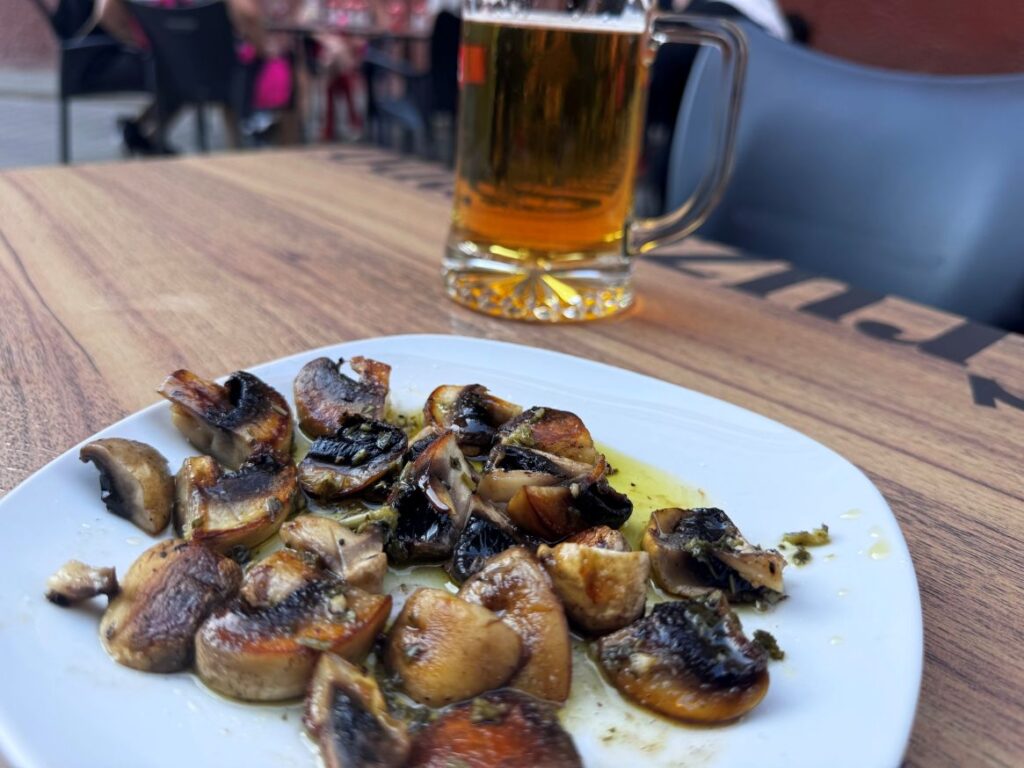
Why Living in Alicante Spain Starts with Ingredients
The best way to understand Alicante’s food culture is not to begin with restaurants. It is to begin with ingredients.
Spanish cooking, at its best, is often about taking excellent produce and not interfering with it too much. That is a great simplification, of course, but there is truth in it. French cooking is often associated with technique, sauces and refinement. Spanish cooking is more likely to say: here is a beautiful piece of fish, a good olive oil, some salt, a hot grill and very little nonsense.
Alicante suits that philosophy perfectly.
The city has the sea beside it, market gardens nearby, rice culture all around it and a province full of fruit, vegetables, almonds, olive oil, wine and fish. When you have ingredients like that, you do not need to over-complicate everything.
We have already written about Mercado Central in more detail (read more about the central market here), so I will not repeat everything here. But the market remains one of the great joys of living in Alicante Spain. From our home in the centre, it is about a fifteen-minute walk, and it is still one of my favourite weekend morning errands.
You can go there with a list, but the market often has other ideas. The fish looks particularly good, or the cherries have arrived, or the tomatoes look too tempting to ignore. You speak to stallholders, ask questions, change your mind and end up cooking something completely different from what you had planned.
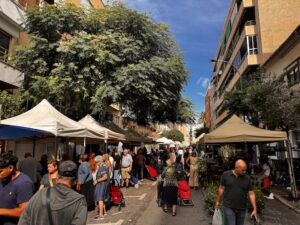
There are other municipal markets too, including Benalúa, Carolinas and Babel, as well as regular outdoor food markets in different parts of the city. Alicante still has a culture of buying fresh food frequently rather than doing one enormous weekly shop.
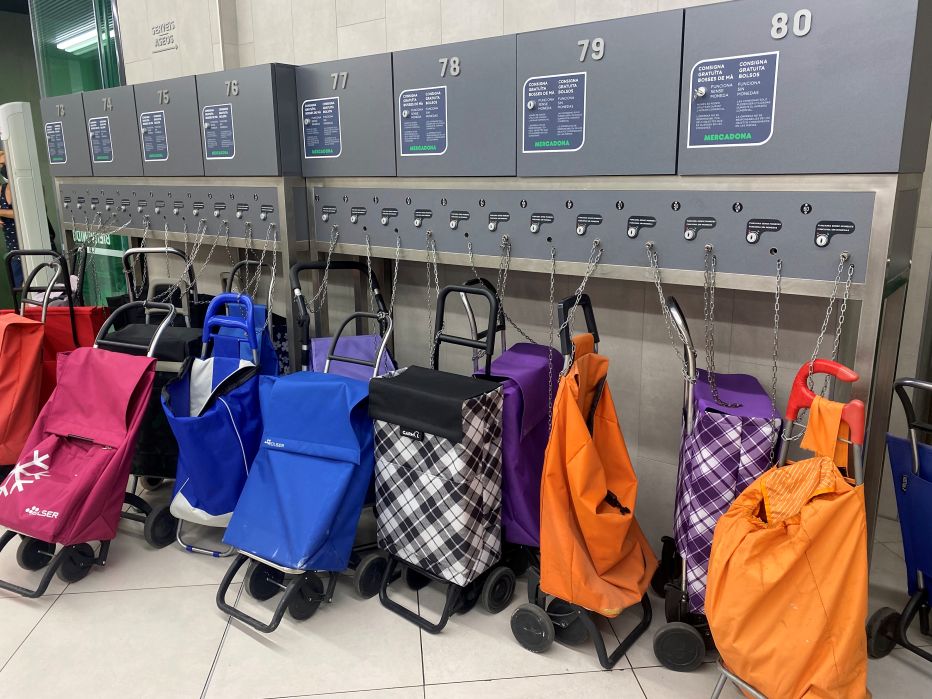
Of course, supermarkets matter too. Mercadona is hugely popular, and the supermarkets inside both El Corte Inglés stores in Alicante are excellent, with the sort of quality that reminds British people of somewhere between Sainsbury’s and Waitrose. But even then, living in Alicante Spain tends to encourage a different sort of shopping. Bread from one place, fruit from another, fish from the market, a few things from Mercadona, and then home with your shopping trolley.
If you live in the city centre and do not depend on a car, you will need one sooner or later. It is not glamorous, but it is extremely useful. At first, many people resist. Then one day they find themselves dragging home several kilos of oranges, vegetables, fish, wine and bread in carrier bags and suddenly understand why half the city owns one.
Outside the centre, of course, people may use cars and do big shops at Carrefour, Alcampo or other larger supermarkets. But in the city itself, one of the quiet pleasures of living in Alicante Spain is that daily shopping can still be done on foot.
Eating with the Seasons
One of the things I love most about Alicante is that you begin to notice seasons through food.
In Britain, supermarkets have trained us to expect almost everything all year round. Strawberries in December, asparagus whenever you fancy it, tomatoes that look perfect and taste of very little. In Alicante, things still feel more seasonal.
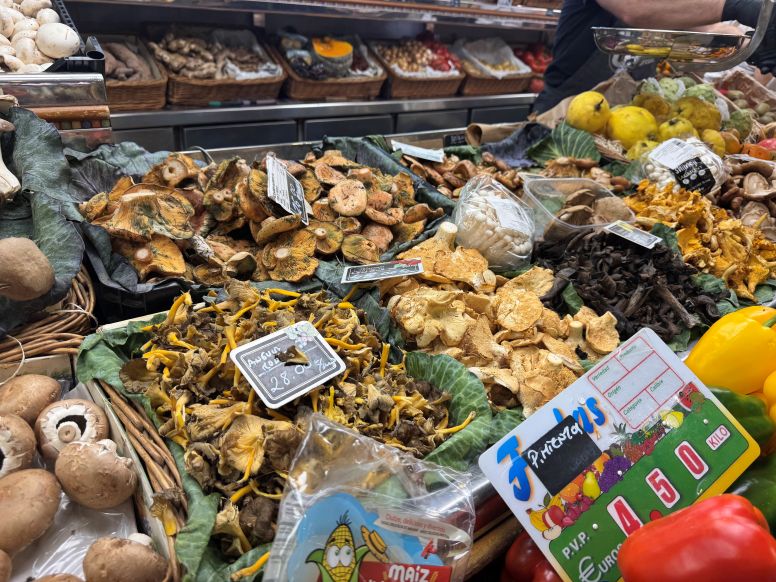
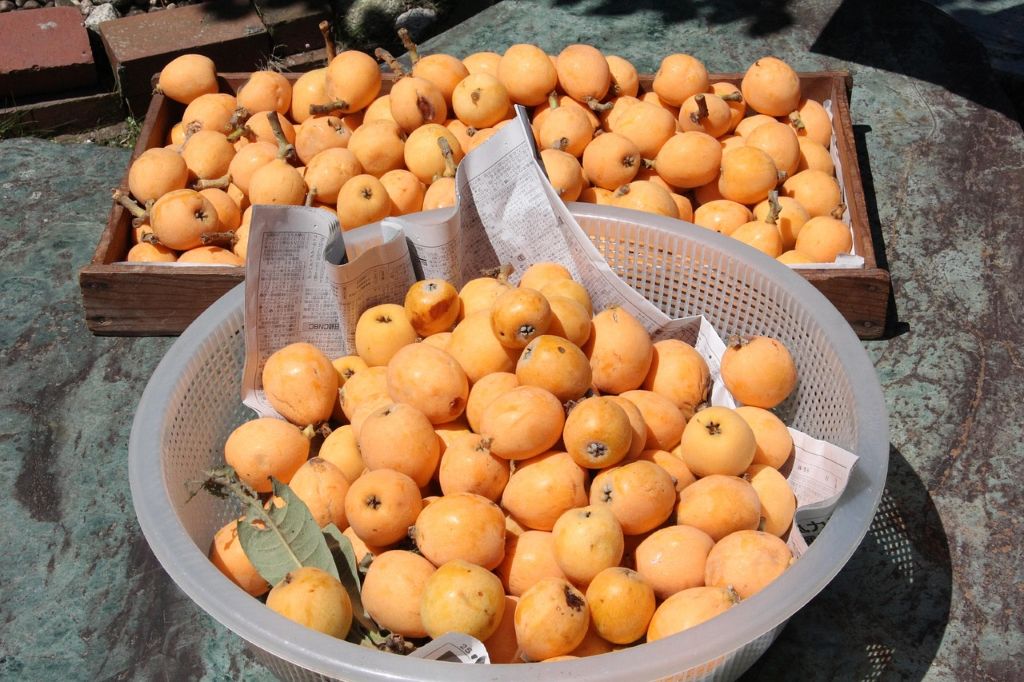
You know nísperos, or loquats, are in season because suddenly they appear everywhere for a few short weeks. Cherries arrive and seem to take over the fruit stalls. In summer, you see alficoz, the long pale cucumber-like vegetable that is traditional in this part of Spain. It is crisp, mild and very Alicante. Then, in autumn, baskets of níscalos appear on stall after stall. These Saffron Milk Caps, also known as rovellons in Valencian, are one of those ingredients that announce their own season.
Nobody needs to tell you. You just walk through the market and there they are.
That is one of the understated pleasures of living in Alicante Spain. You start to look forward to food appearing and disappearing. Instead of being annoyed that something is not available all year, you enjoy it while it is here.
The same is true in restaurants. Menus change because mushrooms are in season, artichokes are good, figs have arrived or the fish that morning was especially fresh. Good olive oil is not treated as a luxury ingredient. It is simply part of normal cooking. Bread still matters. Bakeries still matter. Fresh produce still matters.
Menú del Día: One of Spain’s Great Inventions
Anyone thinking about living in Alicante Spain should learn about Menú del Día as soon as possible.
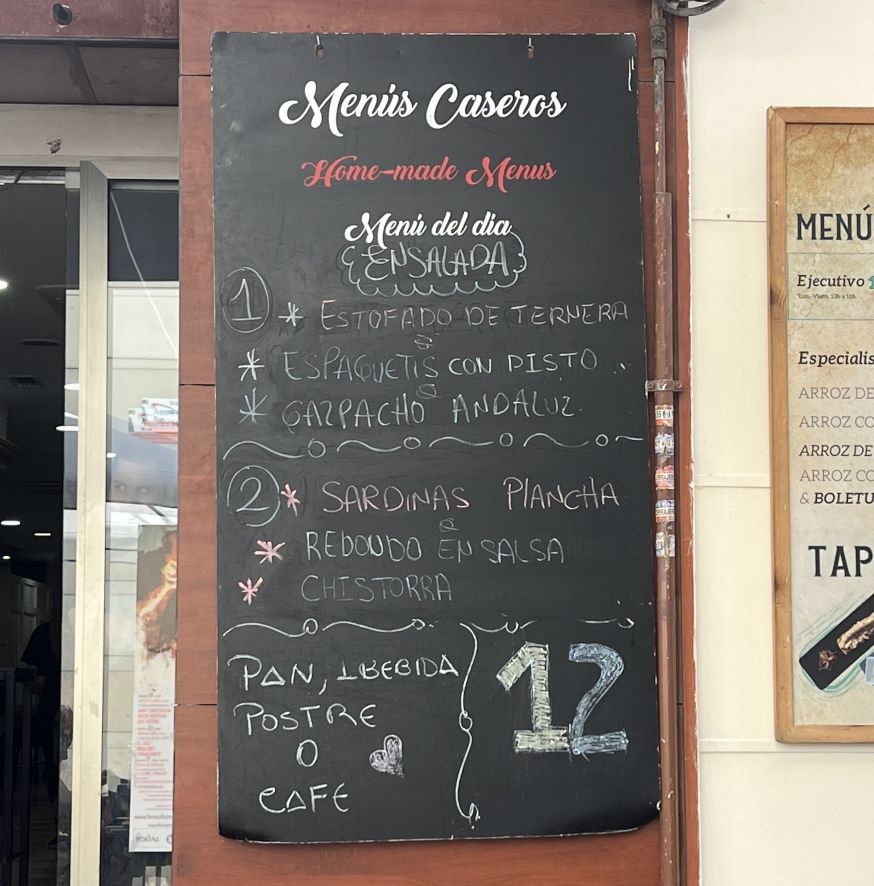
It is one of the best-value ways to eat in Spain and still a big part of weekday life. A typical Menú del Día is offered at lunchtime, usually Monday to Friday (some places will offer it on a weekend too), and often includes a starter, a main course, bread, a drink and either dessert or coffee. Sometimes there will be a salad or small dish to begin with too.
Prices vary. If you are lucky, you can still find a simple Menú del Día for around €11 or €12 in Alicante, while smarter restaurants might charge €18, €20 or €25. Either way, it can be remarkable value.
This is not fancy food. It is often home-style cooking: stews, rice dishes, grilled meat, fish, vegetables, soups, salads and simple desserts. That is exactly the point. It is food designed to feed people properly in the middle of the working day.
Office workers, shop staff, builders, retired people, police officers and local families all use Menú del Día. It is part of how Spain eats.
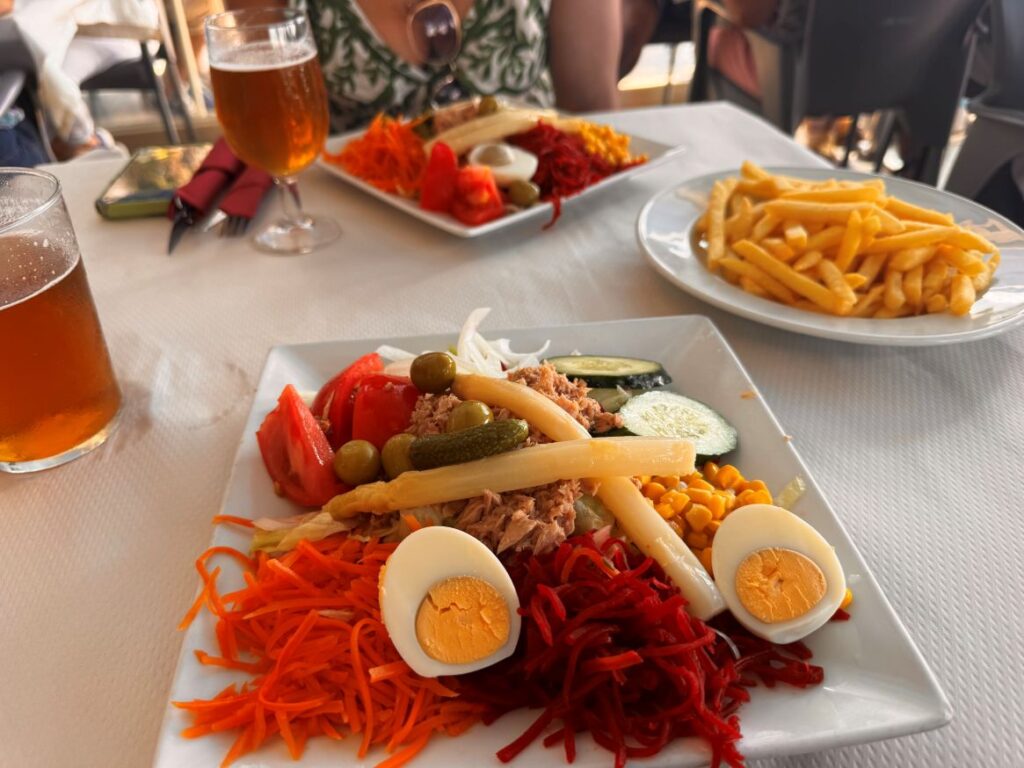
For people moving from Britain, the timing can take some adjustment. Lunch in Alicante is not really a 12.30 sandwich at your desk. Many people eat between 2pm and 3pm, and lunch is often the main meal of the day. Dinner at home is usually later too. For us, it tends to be somewhere between 8.30pm and 9.30pm, sometimes closer to 10pm.
People exaggerate Spanish eating times, as though everyone is sitting down to dinner at midnight every night. That is not quite true. But food does happen later here, and after a while it begins to feel normal.
One of the small surprises of living in Alicante Spain is how quickly your own habits move. A 2.30pm lunch starts to feel perfectly reasonable. Eating dinner at 7pm begins to feel oddly early. And in summer, when the evenings are long and warm, it makes complete sense.
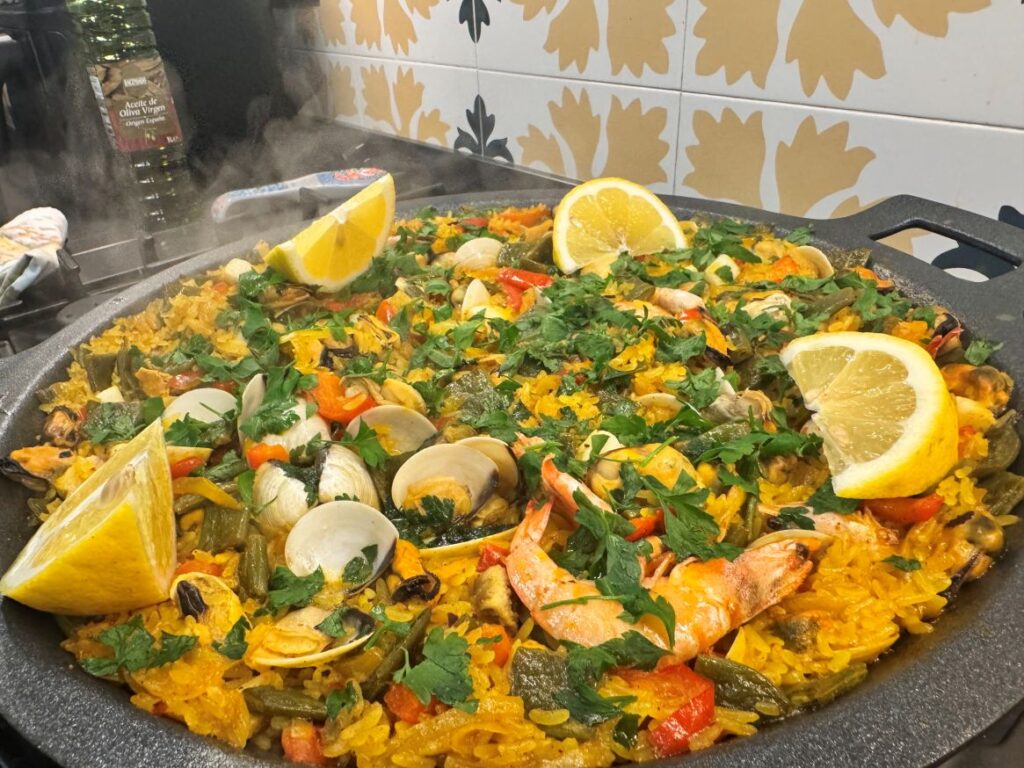
Sunday Lunches, Cakes and the Aroma of Paella Drifting Through the Building
Sunday is still a family day for many people in Alicante.
If you live in an apartment block, you may well smell rice cooking before you have even decided what to eat yourself. Someone upstairs is making paella, or arroz a banda, or another rice dish for the family. By lunchtime the whole building seems to know about it.
Alicante is serious about rice. People outside Spain often say “paella” as though that explains everything, but here there are so many rice dishes that paella is only one part of the story. Arroz a banda, arroz del senyoret, arroz negro, arroz con costra (Delicious by the way), meloso rice dishes, seafood rice, meat rice, vegetable rice. Everyone has an opinion, and everyone knows somewhere that does it properly.
We have written separately about arroz a banda (https://thisisalicante.com/arroz-a-banda), which is one of the great dishes of this part of Spain.
The Sunday food culture is not just about rice. Bakeries are busy too. You often see people walking through the city carrying beautifully wrapped boxes of cakes and pastries, taking them to a family lunch. There is something rather lovely about that. It feels generous and old-fashioned in the best possible way.
Food here is not just fuel. It is a reason to gather.
That is another thing living in Alicante Spain teaches you. Meals are not always rushed. Friends sit longer. Families linger. People order another coffee. Nobody seems quite as desperate to clear the table and move on. the Spanish even have a word for this… its called Sobremesa (“about the table”)
Traditional Bars Still Matter
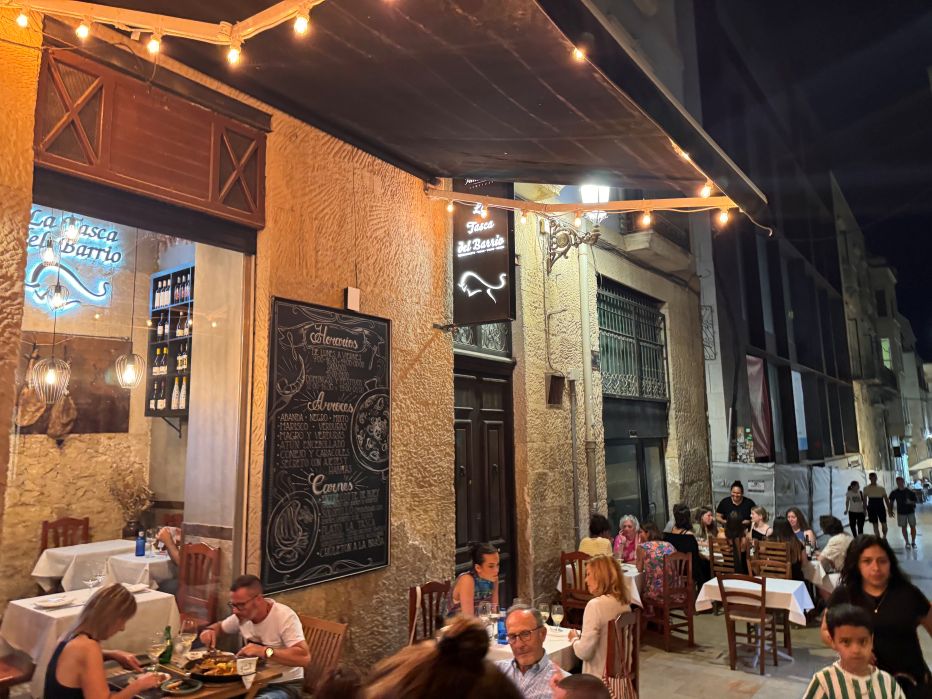
Alicante now has smart restaurants, tasting menus and fashionable places where you can spend a serious amount of money. But some of the best food experiences in the city are still found in old-fashioned bars.
Iain is particularly fond of these places. Give him a busy local bar, a plancha, a counter full of regulars and someone grilling simple food properly, and he is very happy. No foam. No tweezers. No explanation of the chef’s emotional relationship with a beetroot. Just good food, cooked well.
One of our favourite examples is Churrería Santa Faz, in the old town. Yes, it is a churrería, and yes, they do very good churros. But they also serve simple, traditional food prepared by a team of women working away in the back. It is central, unpretentious and exactly the sort of place that reminds you Alicante still belongs to local people.
Then there are institutions such as El Cantó, near Plaza Séneca, where people queue because it has earned that loyalty over many years. Nou Manolín is another Alicante classic, nationally recognised and still famous for quality produce, rice, jamón, prawns and its wonderful bar. Piripi, from the same group, offers a more polished experience but remains firmly rooted in Alicante’s food culture.
These places matter because living in Alicante Spain is not just about discovering new restaurants. It is about finding the places people return to again and again.
Some of them look quite ordinary from the outside. That is often a good sign.

The Modern Alicante Restaurant Scene
The restaurant scene has changed enormously, and anyone who thinks Alicante is only about cheap tapas and beach bars has not been paying attention. The city has become much more confident, and in recent years that has been recognised well beyond the province.
Alicante was named Spain’s Gastronomy Capital for 2025, and national coverage has increasingly presented the city as a serious Mediterranean food destination. The Guardian described Alicante cuisine in terms of rice, seafood and Mediterranean ingredients, while El País celebrated Alicante as a city where the Mediterranean arrives at the table.
That recognition matters, not because we need newspapers to tell us where we live is good, but because it confirms something many residents already know. Alicante has range.
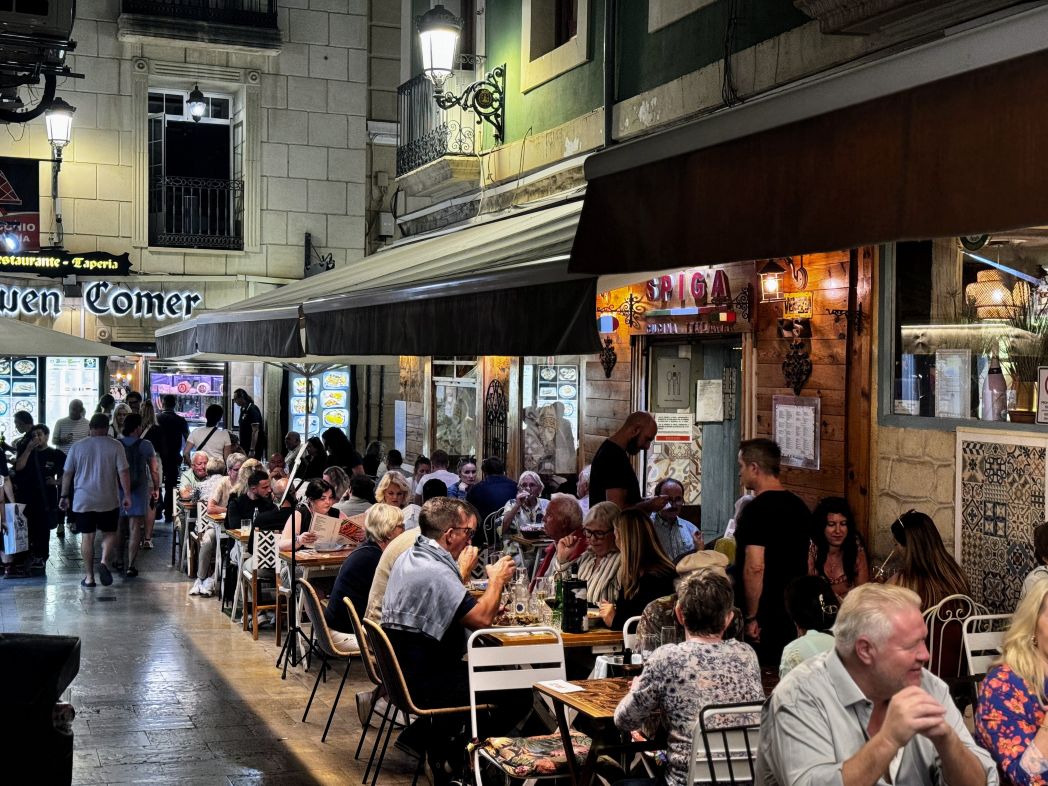
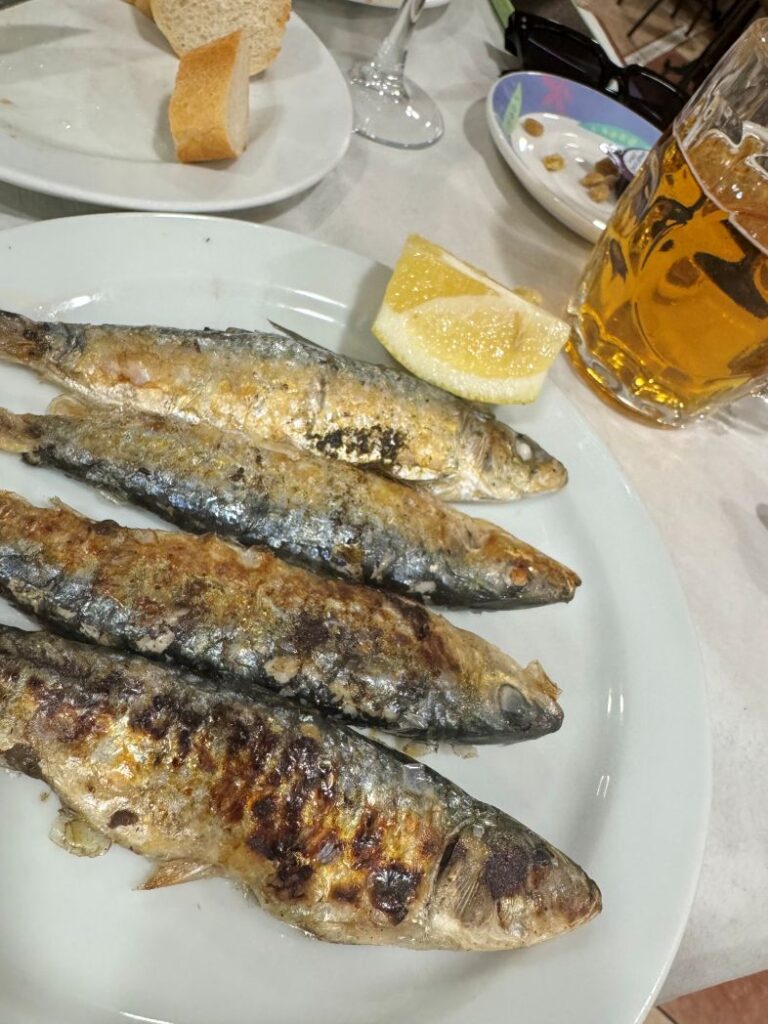
You can eat a basic Menú del Día one day, grilled sardines in a neighbourhood bar the next, and then book somewhere elegant for a birthday or anniversary. Nobody finds that strange. It is all part of the same food culture.
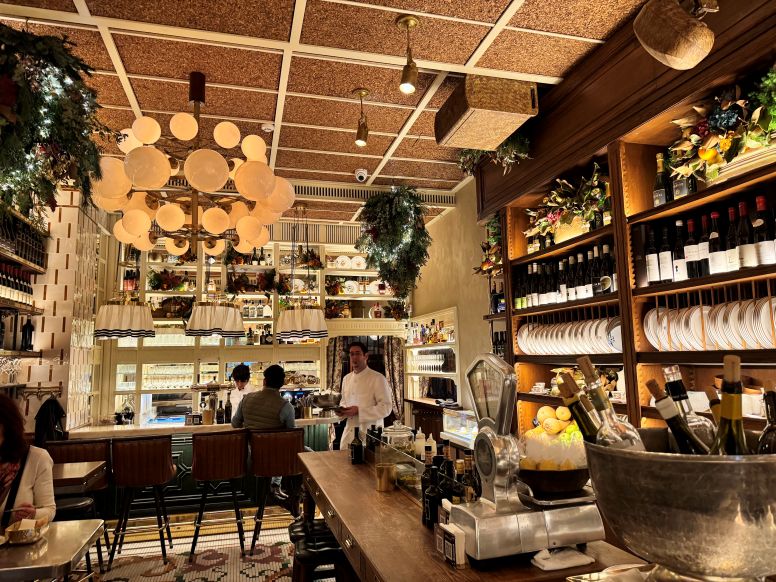
There are modern restaurants around the city that show a more contemporary Alicante. Open, near the rear of Mercado Central, is one of those places that feels stylish without losing sight of good ingredients. Bar Manero has become a popular polished tapas spot. Tabula Rasa, Terre and Orma all belong to that more modern, confident Alicante restaurant scene.
Calle Churruca is another good example of how the city is changing. We wrote about how that once rather forgotten gallery became a new food corridor (read our post about Calle Churruca), and it shows how Alicante can reinvent small urban spaces without losing its character.
For those who want fine dining, Alicante and the surrounding area offer that too. Monastrell, led by María José San Román, brings Michelin-starred Mediterranean cooking to the city itself. Nearby La Finca, in Elche, led by Susi Díaz, is one of the province’s great gastronomic names. Baeza & Rufete in Vistahermosa offers a more intimate tasting-menu experience built around Alicante produce, olive oils, herbs and sea flavours. Distrikt41 is another ambitious restaurant working with seasonal menus and a more contemporary approach.
The point is not that everyone needs to eat this way. Most of us do not live on tasting menus, unless we have won the lottery or have very generous friends. The point is that living in Alicante Spain gives you choice. You can have a €12 lunch on Tuesday, a grilled sepia in an old bar on Friday and something far more elaborate when the occasion calls for it.
International Food in Alicante
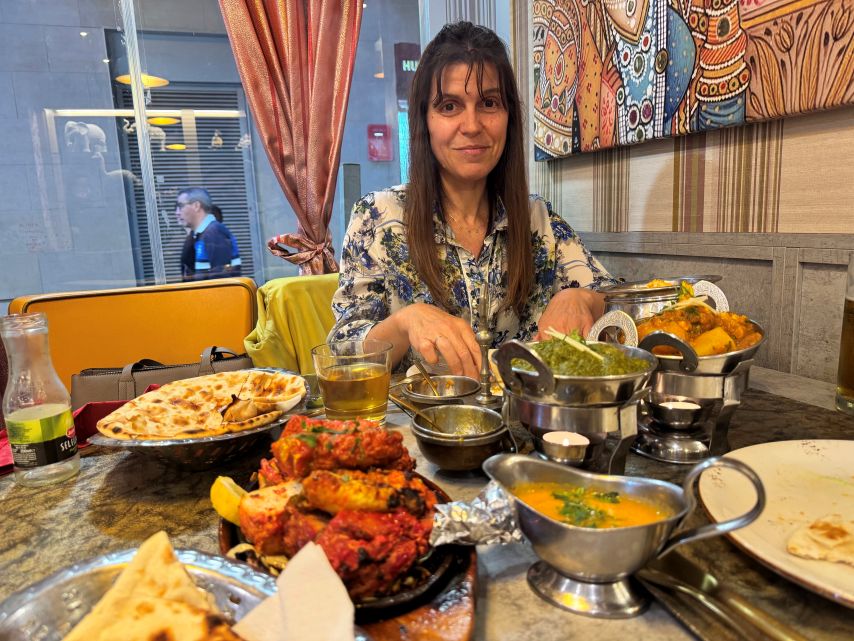
Another thing that surprises some people is how international Alicante’s food scene has become.
Traditional Spanish food is still at the centre of things, but it now sits alongside restaurants from all over the world. There are Colombian, Ecuadorian and Venezuelan places, as well as Chinese, Indian, Italian, Japanese, Thai, Ukranian and many others. Sushi and ramen have become especially popular in Spain, and Alicante is no exception. Around the city, you will often see queues outside ramen restaurants and sushi places, particularly at weekends.
The big international chains are here too. KFC, Burger King, Taco Bell, Five Guys and the usual suspects are all available for those moments when children win the argument.
The one gap, for us, is proper Lebanese or Turkish-style grilled food. Iain still misses a proper shish kebab in pitta bread. Not a late-night kebab of questionable origin after too many drinks, but a proper grilled skewer, charred and juicy, with good salad and bread. Alicante does many things beautifully, but that particular craving remains under-served.
No city is perfect.
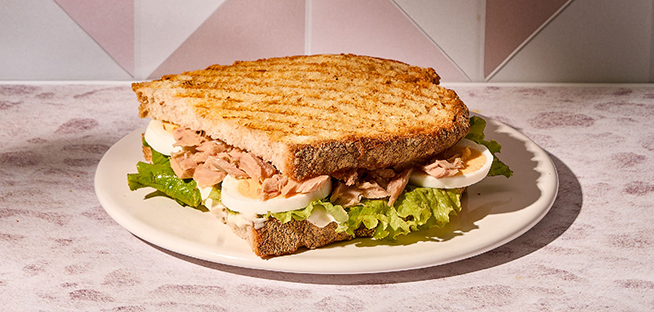
The Sandwich Vegetal Surprise
There are also small food lessons you only learn by making mistakes.
One of mine was the sandwich vegetal.
In English, if someone says “vegetable sandwich”, you might reasonably expect it to be vegetarian. In Spain, a sandwich vegetal often contains tuna. Sometimes egg too. The first time this happens, it is a surprise.
Fortunately, I like tuna.
These little differences are part of the pleasure of living in Alicante Spain. You learn the local logic gradually. You learn that breakfast might be toast with tomato and olive oil. You learn that ordering coffee involves more options than you first realised. You learn that a simple ensaladilla rusa can be excellent or terrible, depending on where you go. You learn that some of the best bars do not look particularly impressive until you see how many locals are inside.
You also learn that Spanish people will queue for food they trust. If there is a crowd outside a place every lunchtime, it is usually worth paying attention.
Alicante Wine, Fondillón and Local Pride
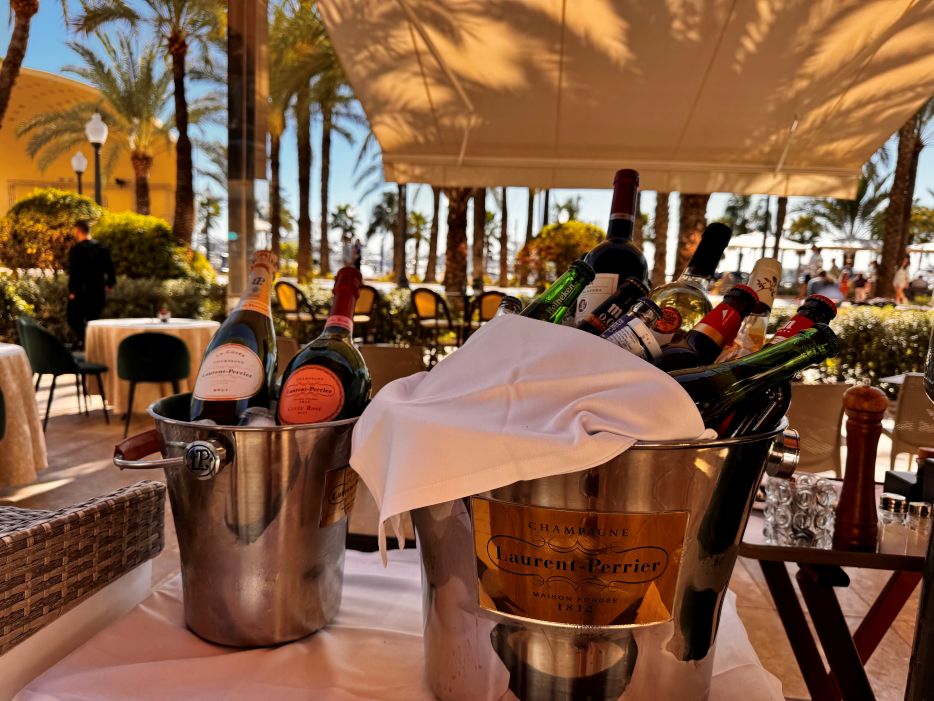
Alicante’s food culture is not only about what is on the plate. The province also has its own wine tradition, and it deserves more attention than it often receives.
Many people outside Spain know Rioja or Ribera del Duero. Fewer realise that Alicante has its own protected wine region, the Alicante DOP. The province produces excellent wines, especially from Monastrell grapes, as well as Moscatel and the historic Fondillón.
Fondillón is one of Alicante’s great gastronomic treasures: a unique, aged wine with deep roots in the province. We have written a lot more about it separately (read more about Fondillon wine).
Local wine is one of those things that helps you understand the area better. It connects the city to the mountains, vineyards and inland villages that many visitors never see. Even the €2.50 bottle of red from Mercadona is perfectly drinkable as an everyday wine with dinner, which tells you quite a lot about the general standard of food and drink in Spain.
And then there is turrón.
Alicante province is famous for turrón, especially around Jijona and Alicante itself. Many people associate it with Christmas, but it is part of a much longer local tradition. We have written more about turrón here (read more about Turron here).
These products matter because living in Alicante Spain is not only about restaurants in the city centre. It is about being surrounded by a province with a deep food identity of its own.
Food, Spending and Priorities
Food occupies an important place in Spanish life, and that is reflected in household spending. Spanish households spend a higher proportion of their income on food and non-alcoholic drinks than the European Union average, and groceries are one of the largest everyday costs after housing.
People care about food. They talk about it, shop for it, queue for it (for a long time on a busy market day), compare it and argue cheerfully about where to find the best version of a dish. A good tomato matters. So does bread. So does rice. So does whether the prawns are worth the price that day.
This is one of the quiet adjustments of living in Alicante Spain. You stop trying to recreate your old shopping basket and start building a new one.
Cooking at Home
Because Iain used to be a chef (and still loves to cook), food at home has always been a big thing for us. Alicante makes that easier.
If the fish looks beautiful, buy fish. If tomatoes are at their best, make something with tomatoes. If níscalos have appeared, perhaps they are dinner. If cherries are in season, they do not need much improvement beyond a rinse under the tap and a bowl of Kefir.
Good ingredients make cooking easier. A ripe tomato, proper olive oil, fresh bread and a little salt can be more satisfying than something far more complicated.
More Than a Restaurant Guide
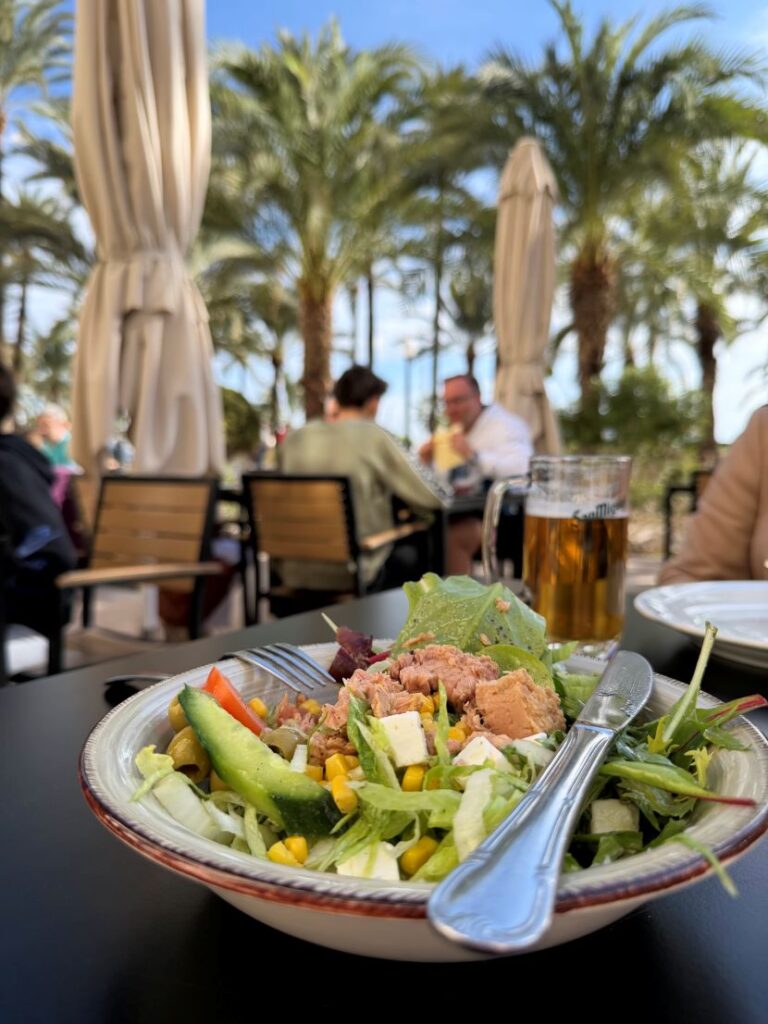
It would be easy to turn this article into a list of places to eat. Alicante has enough restaurants, bars, cafés, bakeries, markets and food shops to fill several guides.
But that is not really what this article is about.
The food scene matters because it affects everyday life. It changes how you spend your mornings, when you eat lunch, what you cook, where you meet friends, what you notice in the market and how you spend Sundays.
Alicante has the smart restaurants, the Michelin stars, the modern tapas bars and the international places. It also has the older bars, the market cafés, the Menú del Día restaurants, the bakeries, the fish counters and the fruit stalls.
The beauty of living in Alicante Spain is that all of these things sit together. You do not have to choose between tradition and modernity, or between simple food and sophisticated cooking. The city offers both.
And perhaps that is why Alicante’s food scene has receives so much attention. It is not trying to become another Barcelona or San Sebastián. It is becoming more confident in what it already is: Mediterranean, practical, generous, seasonal and deeply attached to good ingredients.
How Food Changes You
When we first moved to Alicante, I thought the city simply had some excellent places to eat. Looking back, I realise I was focusing on entirely the wrong thing.
The biggest change wasn’t discovering a favourite restaurant or learning which bar served the best grilled squid. It was the small habits that crept into our everyday lives without us really noticing. Shopping little and often instead of filling a trolley once a week. Looking to see what was in season before deciding what to cook. Accepting that lunch didn’t have to be eaten at midday. Understanding why people happily queue outside a bar they’ve been visiting for years.
Of course, not every meal in Alicante is memorable. There are tourist traps here, just as there are anywhere else. But that’s never really been the point. What stays with me isn’t one particular restaurant or one perfect dish. It’s the way food is woven into everyday life, from the bustle of Mercado Central first thing in the morning to families gathering around the table on a Sunday afternoon.
Somewhere along the way, we stopped thinking of food as simply something to eat and started seeing it as one of the things that makes life here so enjoyable. For me, that’s one of the greatest pleasures of living in Alicante Spain.
Further Reading on Alicante’s superb gastronomy