

Living in Alicante Spain means discovering a city that is considerably more complicated — and more interesting — than the familiar Costa Blanca shorthand of sunshine, beaches and airport transfers.
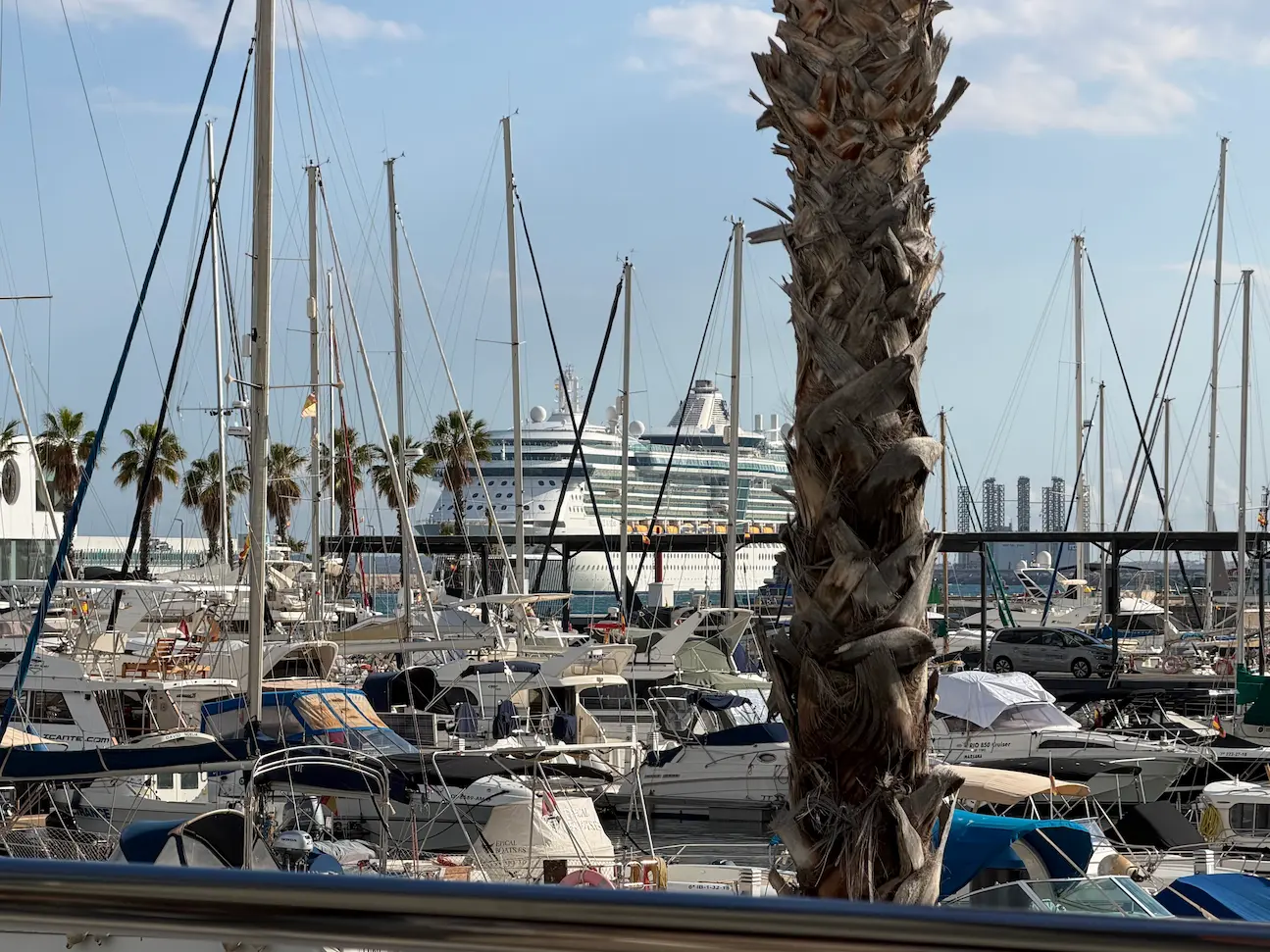
Alicante certainly receives its share of visitors. Cruise passengers appear on the Explanada, weekenders fill the terraces around the old town and newly arrived residents can now be heard attempting to order coffee in an assortment of European languages. Yet Alicante has never quite allowed tourism to take possession of it.
This is not Benidorm, with its extraordinary concentration of hotels and British holidaymakers, nor Torrevieja, where large overseas communities have created a very particular type of international resort town. Alicante is a working Spanish city. It has government offices, hospitals, universities, schools, courts, businesses and neighbourhoods in which the arrival of another cruise ship is of no more immediate concern than whether the bus is late.
That difference matters. Alicante is becoming more international, but it remains unmistakably Spanish — and, more specifically, Alicantino.
Living in Alicante Spain in an increasingly international city
There are undoubtedly more overseas residents in Alicante than there were 10 or 15 years ago. English is heard more frequently, and it is now unusual to find a centrally located restaurant where nobody can manage at least the essentials: menu, table, bill and an admirably confident explanation of the cheesecake.
The international character of the city extends well beyond the British. Our own friends in Alicante include people from Spain, the Netherlands, Bulgaria and other parts of Europe. Walk through the centre and you will also hear French, Italian, Romanian, Ukrainian, Arabic and a variety of Latin American accents.
Cosmopolitan is probably the right word, although it needs a small qualification. Alicante is not uniformly international.
The strongest overseas influence tends to be found in the city centre, around the old town and seafront, and in coastal residential areas such as Cabo de las Huertas and Playa de San Juan. These are the places where international residents, remote workers, tourists and recently arrived families are most immediately visible.
Travel a few streets beyond the central tourist routes, however, and the character of the city changes.
Beyond the centre, Alicante remains resolutely Spanish
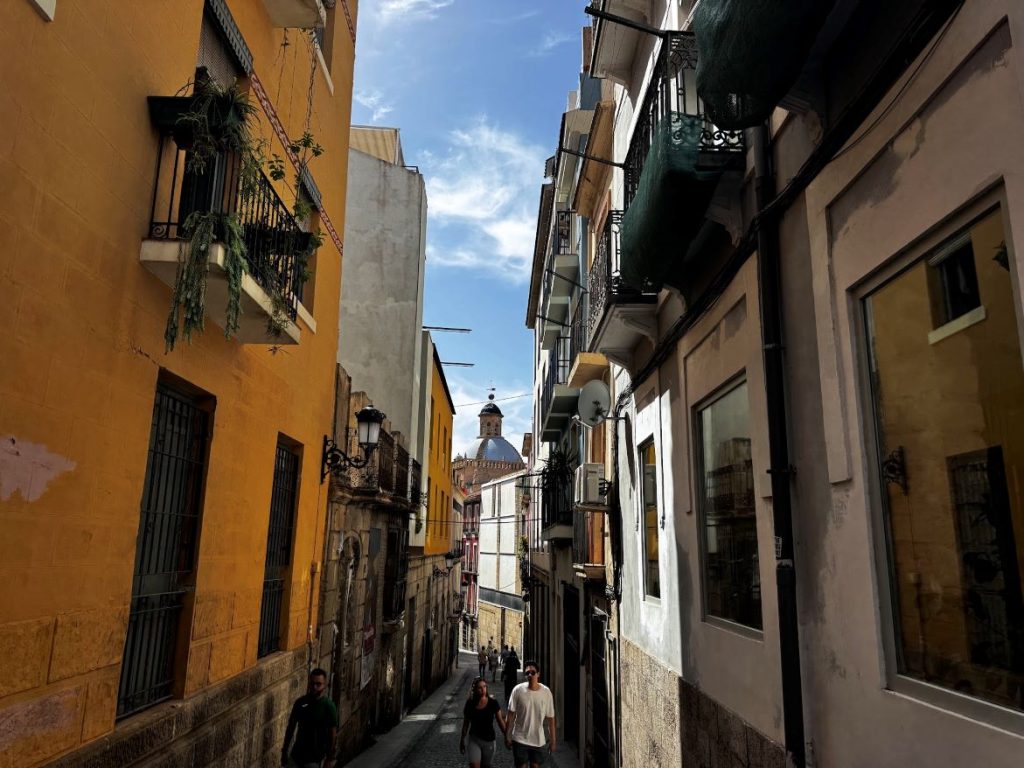
Neighbourhoods such as Carolinas, Altozano, Campoamor, Pla del Bon Repòs, Benalúa, Babel and San Gabriel have a distinctly Spanish, residential atmosphere. These are places of schools, local shops, family bars, neighbourhood markets and apartment blocks whose occupants may have known one another for decades.
Even around Mercado, where the international influence has become much more apparent, it does not take long to find streets where very little English is spoken. Head farther out towards San Gabriel or into Alicante’s northern neighbourhoods and the idea that the city has become an expatriate enclave looks faintly absurd.
Santa Cruz and the historic old town are more complicated. Visitors naturally gravitate towards their steep streets, whitewashed houses and views of the castle, but these are not museum quarters populated entirely by holiday lets. Long-established residents and neighbourhood associations still maintain a strong sense of local identity.
This is one of the pleasures of living in Alicante Spain. You can enjoy the conveniences of an increasingly international city without feeling that you have moved to a resort designed principally for foreigners.
There is no need to conduct every social interaction in English or to spend one’s life in British pubs discussing the comparative price of bacon. Alicante gives newcomers ample opportunity to meet people from elsewhere, but it also places ordinary Spanish life directly outside the front door.
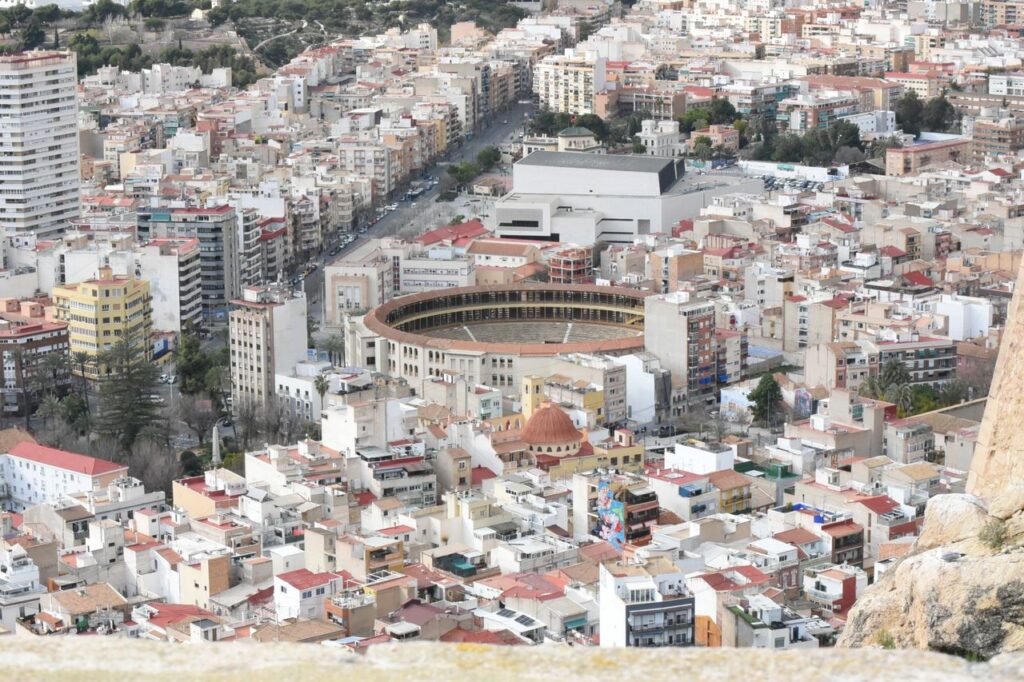
Culture is something people do, not merely something they visit
When people talk about culture in a city, the conversation often degenerates into a list of museums and theatres. Alicante has plenty of both, but its culture is most visible in the streets.
It is there in the evening paseo, when several generations of the same family appear together in the squares. It is in the late timetable, the busy terraces, the children still playing outside long after British children would have been dispatched upstairs. It is in neighbourhood loyalties, local associations and the ability to turn a religious feast day into a procession involving brass bands, flowers, uniforms, fireworks and considerable disruption to traffic.
Life here is more public than it is in Britain. People meet outside, argue outside, eat outside and, with impressive stamina, conduct long conversations while standing directly across the narrowest part of the pavement.
The city’s climate helps, of course, but this is more than a consequence of warm evenings. Alicante’s plazas, promenades and streets function as communal rooms. Concerts, processions, markets and performances take place in spaces people already use as part of daily life.
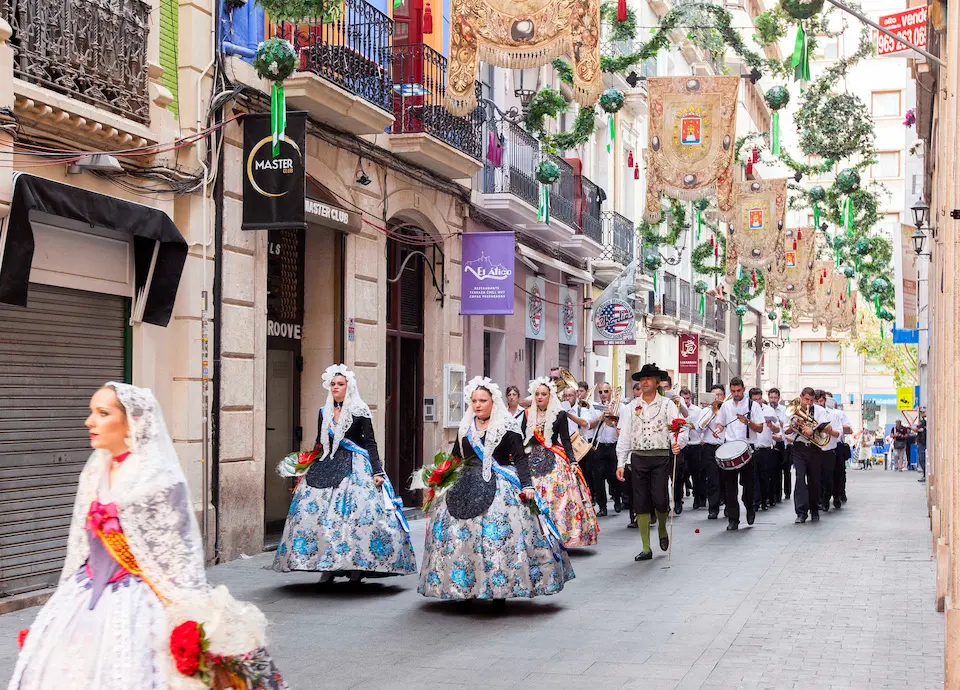
Living in Alicante Spain through the rhythm of its fiestas
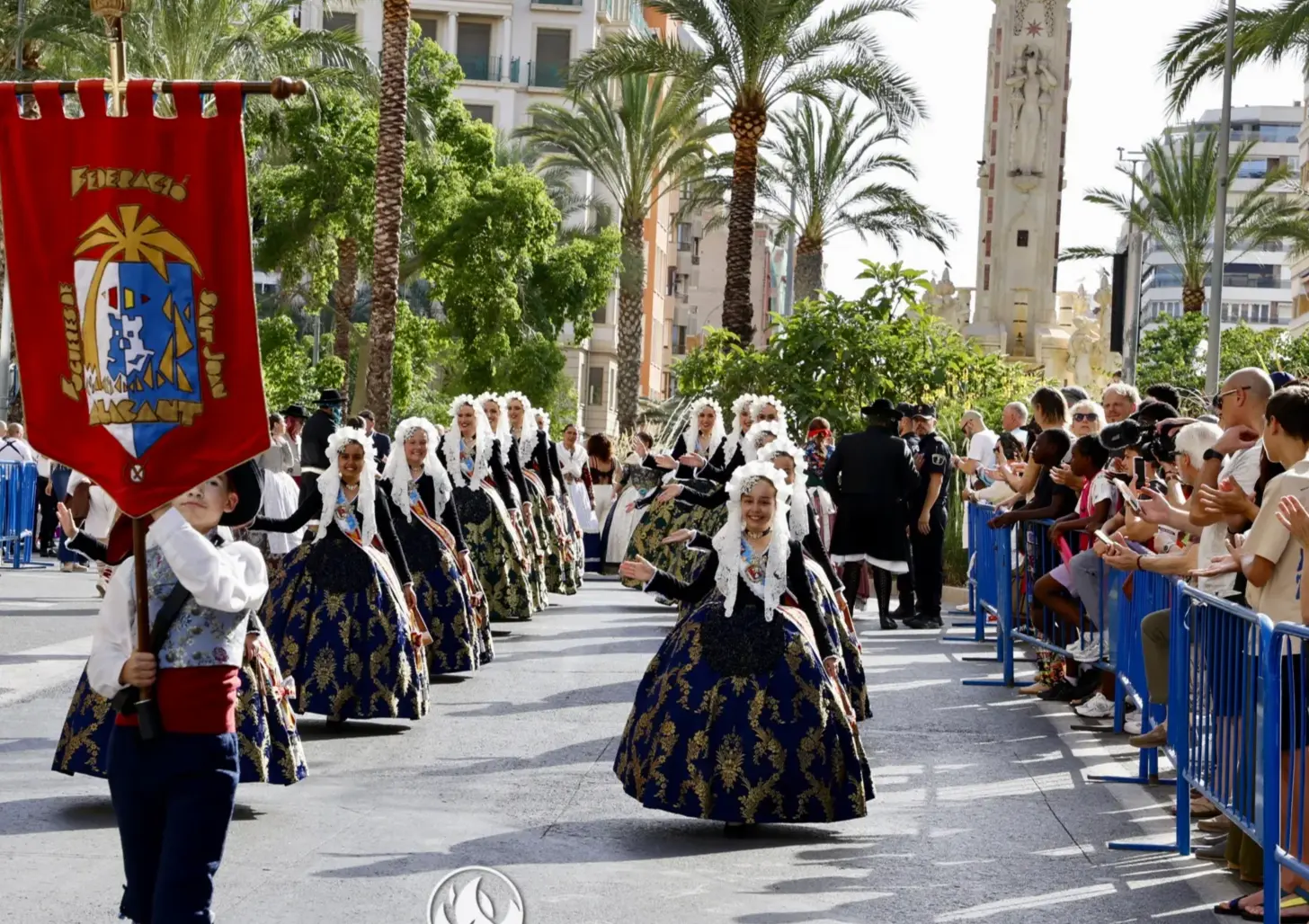
The clearest expression of Alicante’s culture comes through its fiestas. These are not simply spectacles arranged for visitors. They depend on thousands of local people who belong to commissions, brotherhoods, bands, dance groups and neighbourhood associations.
The year begins with the arrival of the Three Kings. The grand parade takes place on 5 January, followed by the Epiphany on 6 January, when many Spanish children traditionally receive their presents. Christmas Day can almost seem like the warm-up act.
Semana Santa brings solemn processions through the city, particularly around the old quarter. Religious images are carried through narrow streets accompanied by drums, incense and crowds that range from the deeply devout to those who attend because their family always has.
Soon afterwards comes the Romería de Santa Faz, held on the second Thursday after Easter. Thousands of people walk from the city to the monastery of Santa Faz, many carrying the traditional cane decorated with rosemary. It is part pilgrimage, part civic ritual and, for some participants, an opportunity to start eating and drinking remarkably early in the morning.
Then comes June and the event that belongs to Alicante above all others: Hogueras de San Juan, or Les Fogueres de Sant Joan.
Hogueras combines monumental art, satire, neighbourhood rivalry, traditional dress, food, fireworks, marching bands and enough gunpowder to make newcomers wonder whether the city is under intermittent artillery fire. The official fiestas are recognised as being of International Tourist Interest and as an Asset of Intangible Cultural Interest.
But the grandeur of the main monuments and mascletàs is only part of it. Local commissions work throughout the year. Children grow up participating. Families return to the same barracas, parades and ceremonies each June. The festival is not staged around Alicante; for several weeks, it reorganises Alicante.
Elsewhere in the calendar are Carnival, Moors and Christians celebrations in several neighbourhoods, the city’s patronal festivities and numerous smaller local events. The result is a year punctuated by processions, costumes, music, road closures and the occasional unexplained explosion.
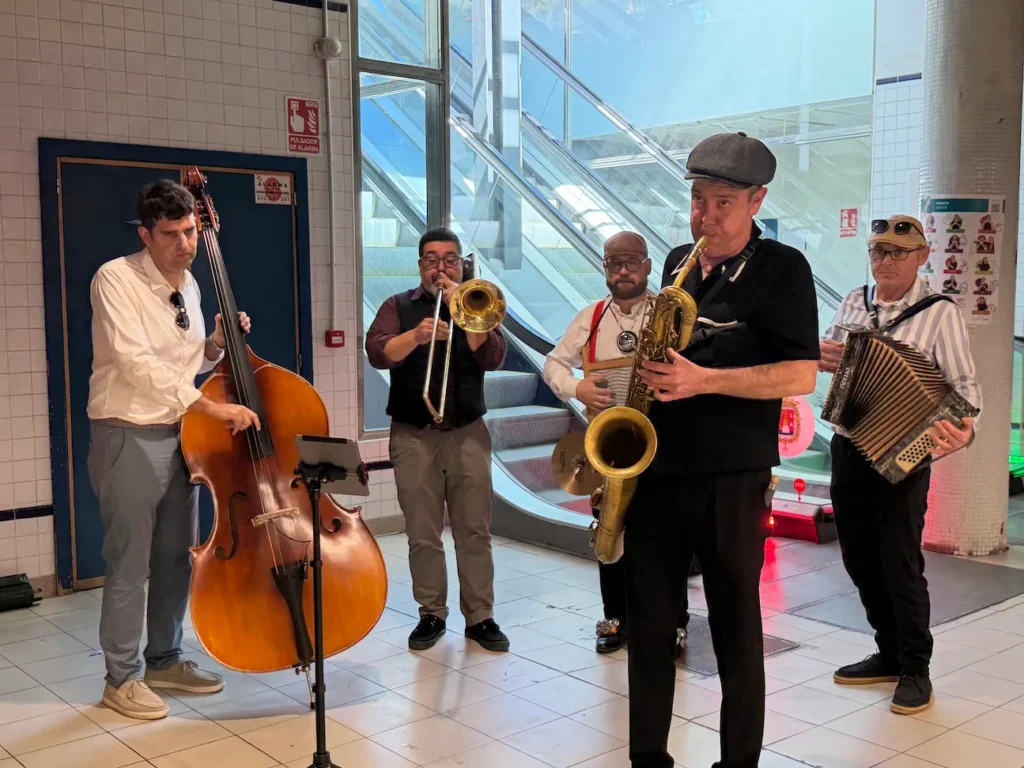
Music and living in Alicante Spain
Music is woven particularly tightly into life in Alicante and the wider Valencian Community.
Almost every procession appears to require a band. Hogueras commissions, Moors and Christians groups, religious brotherhoods and neighbourhood fiestas are accompanied by musicians of all ages. Learning an instrument here does not necessarily mean practising alone in a bedroom before abandoning the enterprise at 14. It can lead to membership of a musical society, regular rehearsals and a lifelong place in the community.
The traditional sound of Alicante’s fiestas often comes from the dolçaina — dulzaina in Spanish — accompanied by the tabalet, a small drum. The dolçaina is a double-reed instrument with a forceful, carrying sound ideally suited to outdoor celebrations. Subtle it is not, but subtlety would be of limited use when leading a parade through a crowded street.
Brass and wind bands are equally important. Pasodobles accompany parades, civic ceremonies and summer evenings, while municipal and neighbourhood bands provide a standard of musicianship that can surprise those accustomed to regarding a local band as a slightly precarious collection of enthusiasts.
The Banda Sinfónica Municipal de Alicante gives regular performances, many of them free. During the summer, music moves into the open air. The 2026 Verano de Músicas programme, for example, includes 21 concerts in Plaza del Ayuntamiento between 8 July and 15 August, part of a wider municipal programme of concerts and performances in public spaces.
There is something especially civilised about wandering into the Town Hall square on a warm evening and finding a full band playing pasodobles to several hundred people. No booking, no dress code and no requirement to pretend you have understood the more challenging portion of the programme.

Concert halls, theatres and galleries
Alicante also has a substantial formal cultural life.
At its centre is ADDA — Auditorio de la Diputación de Alicante (Campoamor, Avenida de Jijona 5), home to ADDA·Simfònica Alicante. Its programme includes major orchestral performances, soloists, jazz and visiting musicians, with a concert hall respected for its acoustics.
The Teatro Principal (Centro, Plaza Ruperto Chapí) presents Spanish theatre, comedy, dance, musicals, opera and touring productions. Much of the spoken programme is naturally in Spanish, but music and dance require considerably less linguistic courage.
For visual art, the Museo de Arte Contemporáneo de Alicante, usually known as MACA (Old Town, Plaza de Santa María 3), occupies a historic building opposite the Basilica of Santa María. Its permanent collection includes important works of modern and contemporary Spanish art.
The Museo de Bellas Artes Gravina, or MUBAG (Old Town, Calle Gravina 13–15), concentrates more closely on fine art connected with Alicante and the province. Las Cigarreras (Campoamor, Calle San Carlos 78), housed in the former tobacco factory, offers a more contemporary mixture of exhibitions, workshops, alternative music and performance.
There are also cultural programmes at Casa Mediterráneo, temporary exhibitions at La Lonja, events organised by the University of Alicante and smaller galleries scattered through the centre. Alicante Turismo’s own cultural guide treats the city’s museums, historic sites, festivals, music and performing arts as parts of the same cultural landscape rather than separate attractions.
Much of it is free or reasonably priced. Alicante may not have the cultural scale of Madrid or Barcelona, but neither does attending an exhibition require a strategic financial review.

Live music without the concert-hall formality
The city’s music continues after the municipal bands have packed away their stands.
Alicante has small venues for jazz, flamenco, indie, blues, rock, electronic music and acoustic performances. Las Cigarreras hosts less conventional events, while Stereo near Mercado Central has long been associated with the city’s indie and rock scene. Entre Bambalinas combines seated performances with food and wine, Blacky offers intimate live sessions in the old town, and larger concerts take place at locations including El Muelle Live and VB Spaces.
ADDA sits at one end of the scale; a Friday-night jam session in a crowded bar sits at the other. Both belong to the same city.
We have covered the individual venues, locations and practical details separately in our guide to where to find live music in Alicante. The range is broader than many people expect from a city of Alicante’s size.
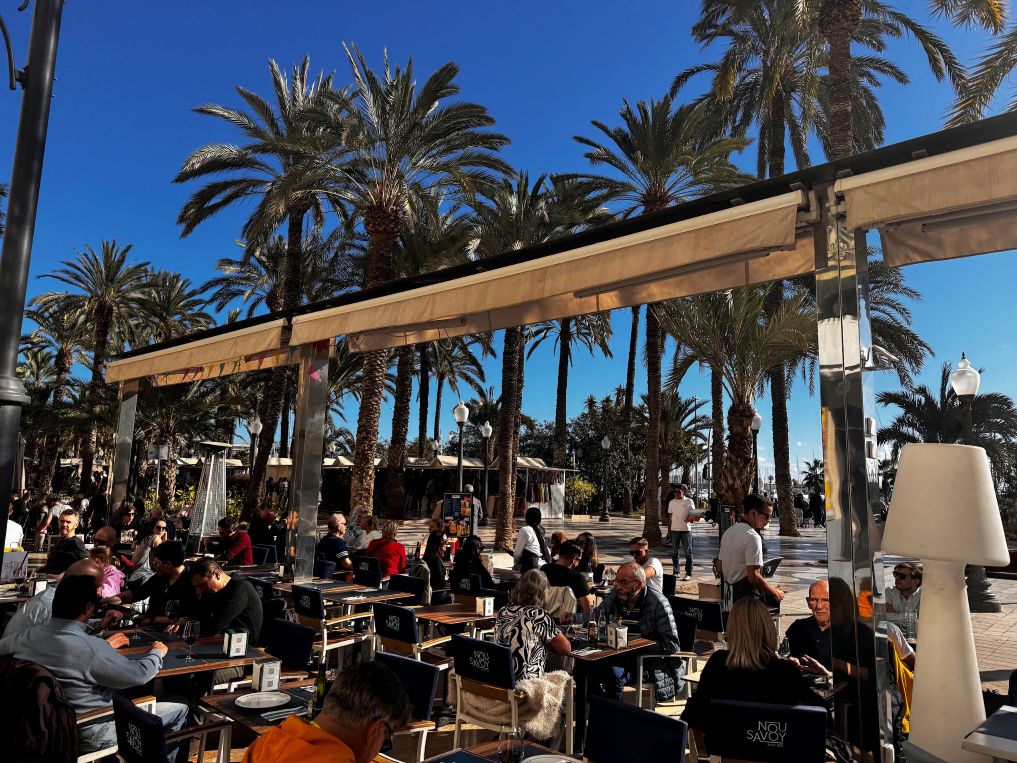
Living in Alicante Spain without living in a holiday resort
Perhaps Alicante’s greatest cultural strength is its balance.
It is international enough for a newcomer to settle in without feeling isolated. There are foreign residents, language exchanges, international restaurants and increasing amounts of English. Yet it remains Spanish enough to make living here feel meaningfully different from an extended holiday abroad.
Spanish is still the language of ordinary life. Valencian is also present in street names, education, official communication, music and the vocabulary of local fiestas. Neighbourhood identities remain strong. Families participate in traditions that are passed from one generation to the next.
Alicante does not require overseas residents to surrender their own identity, but it offers far more when they take an interest in the identity of the city around them.
That might mean watching a Semana Santa procession, learning why everybody is walking to Santa Faz, recognising the opening bars of a familiar pasodoble or accepting that no useful conversation will be possible during a mascletà.
Living in Alicante Spain is not simply a matter of having the Mediterranean at the end of the street. It is living in a city where international influences are becoming part of daily life, but where the fiestas, neighbourhoods, language and music still unmistakably belong to Alicante.
Further Reading
Alicante Turismo’s guide to culture in Alicante


