

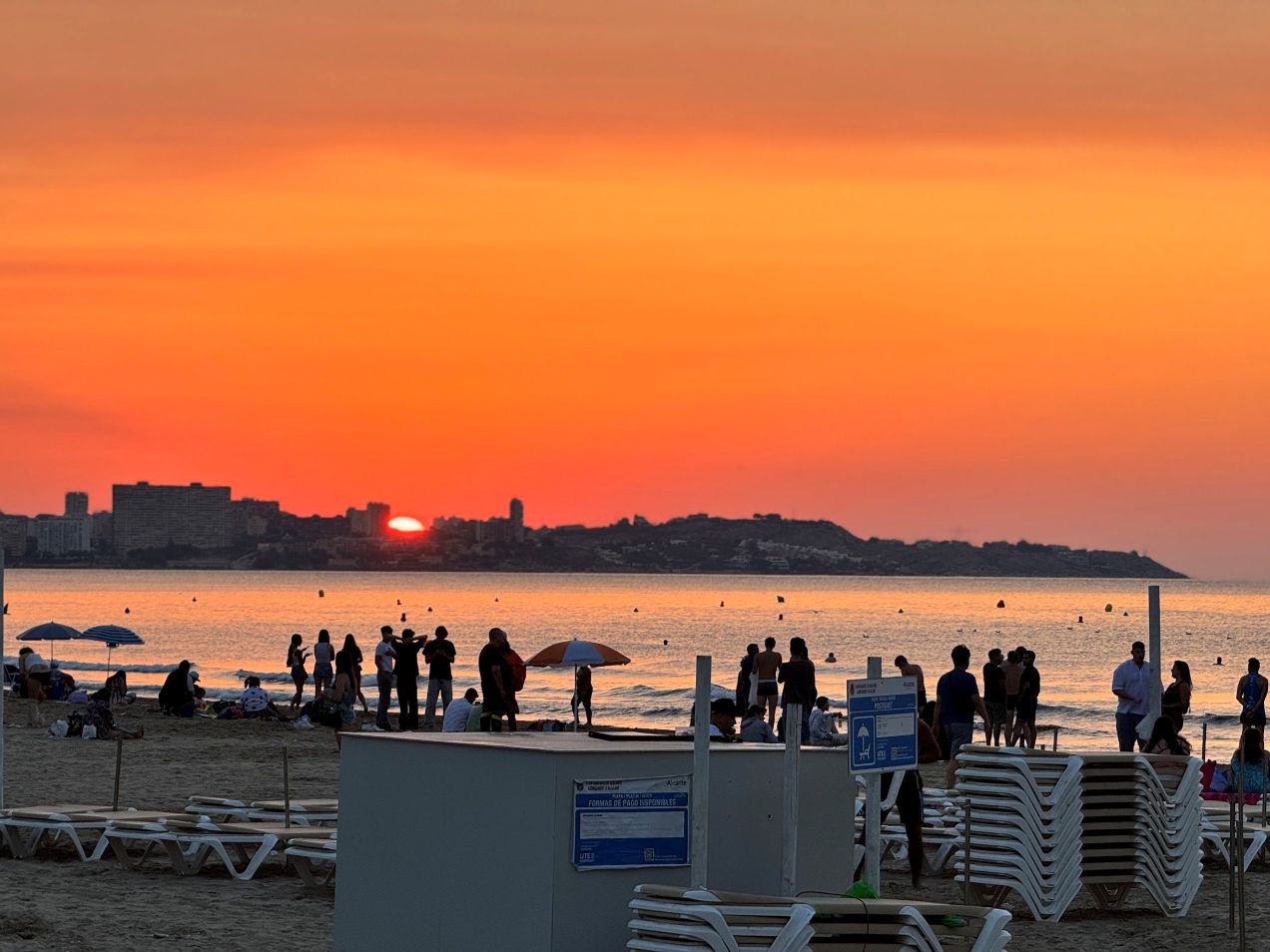

When people talk about living in Alicante Spain, the weather is usually one of the first things they mention. And for good reason. The climate here shapes everyday life in ways that people from northern Europe often find quite remarkable.
But the reality of Alicante’s climate is a little more nuanced than the simple idea of endless sunshine.
Yes, the city enjoys more than 300 days of sunshine each year, mild winters and long summers. But what really makes the climate special is the way it encourages people to live outdoors and enjoy the rhythm of the Mediterranean.
For someone like me, who grew up in the north of Spain and later spent many years living in the UK, that change in rhythm is something you notice immediately.

From Asturias to Alicante
I’m originally from Gijón in Asturias, in the north of Spain. It’s a beautiful part of the country – dramatic coastline, lush green countryside and wonderful food – but the weather is very different from Alicante.
Asturias is green because it rains a lot. The landscape is vibrant and almost permanently fresh-looking. After living in Britain for more than twenty years, that sort of climate felt quite familiar.
When my husband Iain and I moved to Alicante in 2021, one of the first things I noticed was how different the colours of the landscape are here.
It isn’t the deep green of northern Spain or the UK. Alicante is drier. The colours are softer – sandy, golden, sometimes dusty in the height of summer.
At first it feels unusual if you’re used to greener places, but after a while you realise it’s simply the character of the Mediterranean.
And there is a certain beauty in that too.
Life Happens Outside
One of the most noticeable things about living in Alicante Spain is how much of life happens outdoors becasue if the nice sunny weather. In fact Alicante is often cited as the sunniest cities in Europe.
People walk everywhere. Families spend evenings in plazas while children play in nearby parks. Friends meet on terraces after work for a drink. Even simple errands often turn into small social moments because the weather makes it pleasant to linger outside.
The evenings are particularly lovely.
Once the heat of the day softens, people appear in the streets. There is a gentle ritual to it: a walk along the promenade, perhaps a stop for a drink, maybe a stroll through the old town before heading home.
The Spanish call this the paseo, and it’s something I still enjoy enormously.
Instead of hiding indoors from the weather, people come out and enjoy the city.
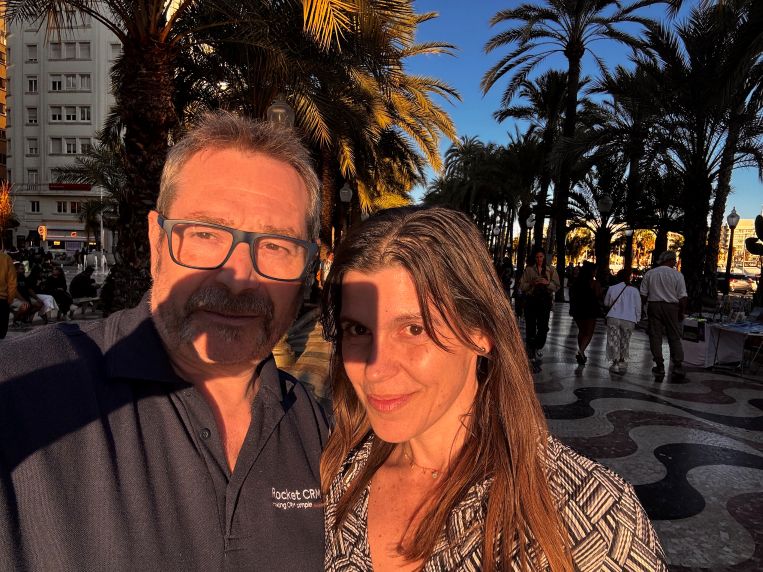
Summer Is Hot (Very Hot Sometimes)
Of course, many people imagine that living in Alicante Spain means permanent summer. That’s not quite true.
The summers here are certainly hot, especially in July and August. I have to admit that I sometimes struggle with the very hottest days. My husband would happily sit on the beach for hours, but I’m usually ready to escape after a much shorter time.
You learn to adapt.
Shutters stay closed during the afternoon. Errands happen early in the morning. Lunch is taken slowly. And the city really comes alive later in the evening when the air becomes comfortable again.
In many ways Alicante teaches you the Spanish art of doing things at the right time of day.
Spring Is My Favourite Season
Although many visitors love the height of summer, my favourite time of year in Alicante is actually spring.
The temperatures are warm but gentle, the skies are almost always blue, and the city feels full of energy again after the quieter winter months.
Sometimes when I walk through the streets in spring the trees are in blossom (in May usually) and the air carries that faint blossom scent. It’s one of those small details that makes everyday life in Alicante feel quietly special.
There’s another smell that occasionally makes me smile too.
In the plaza near where we live, the council sometimes cuts the grass in spring and suddenly the air smells exactly like freshly cut grass in Britain. For a moment it feels strangely familiar, almost like being back in the UK.
By the time summer arrives, though, that greenness has usually disappeared and the landscape returns to the browns and golden colours typical of this part of Spain.
Mild Winters
Winter in Alicante is also quite different from what many northern Europeans expect.
It isn’t hot, of course, but it is generally mild. Daytime temperatures often sit comfortably in the mid-teens or higher, and you will still see people sitting outside cafés in the sun in January.
You can walk along the seafront without a heavy coat and enjoy the light reflecting off the sea.
For many people who move here, winter is actually one of the most pleasant surprises of living in Alicante Spain.
The Curious Case of Saharan Rain
There is one strange weather phenomenon that still surprises people when they first experience it here.
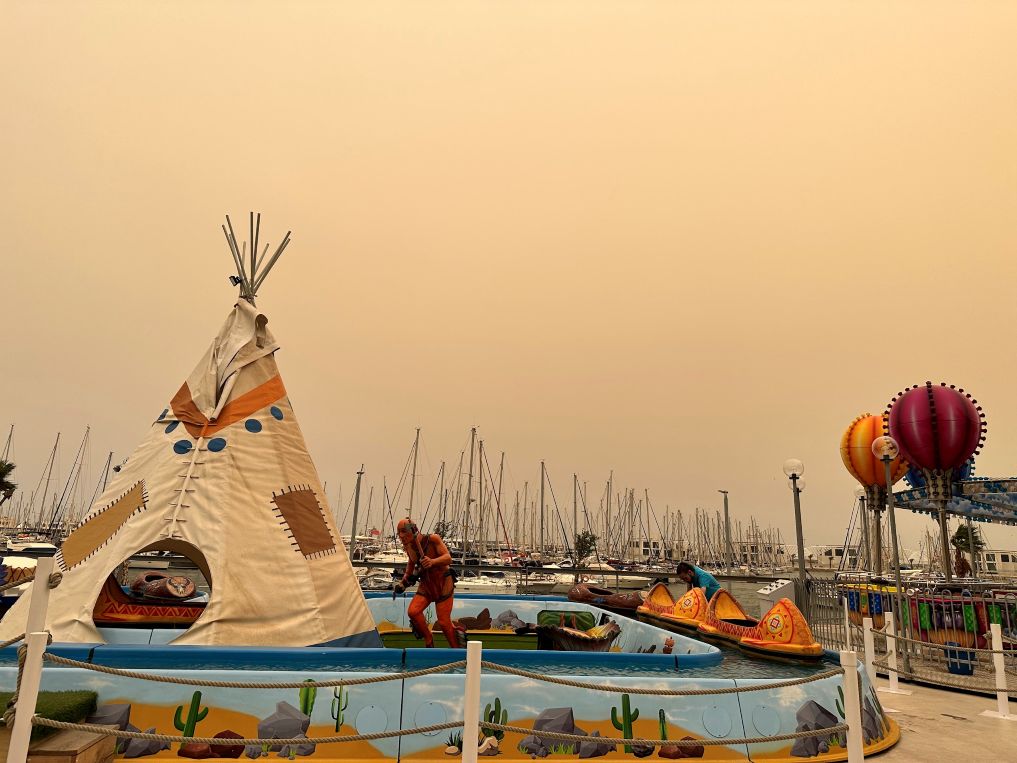
Occasionally rain arrives carrying fine sand from the Sahara desert they call it a Calima. The sky turns a slightly odd orange colour, the rain falls, and the next morning every car in the city looks as though it has been lightly dusted with cinnamon.
If you happen to have washing hanging outside when this happens, you may discover it has acquired a faint sandy tint.
It can be a little annoying, but it’s also oddly fascinating.
You don’t get that in Manchester.
The Gota Fria
There is also a weather phenomenon that people sometimes mention called gota fría, which roughly translates as “cold drop”. It tends to happen in autumn when warm Mediterranean air meets cooler air higher in the atmosphere, occasionally bringing sudden heavy rain. It doesn’t happen every year and in Alicante city itself it is usually far less dramatic than in some inland or southern areas. Most of the time it simply means a day or two of very intense rain before the sunshine returns. It can be quite surprising if you’re not used to it – one day the sky is perfectly blue and the next it’s raining as if someone has tipped a bucket over the city – but it rarely lasts long.
A Gentle Coastal Microclimate
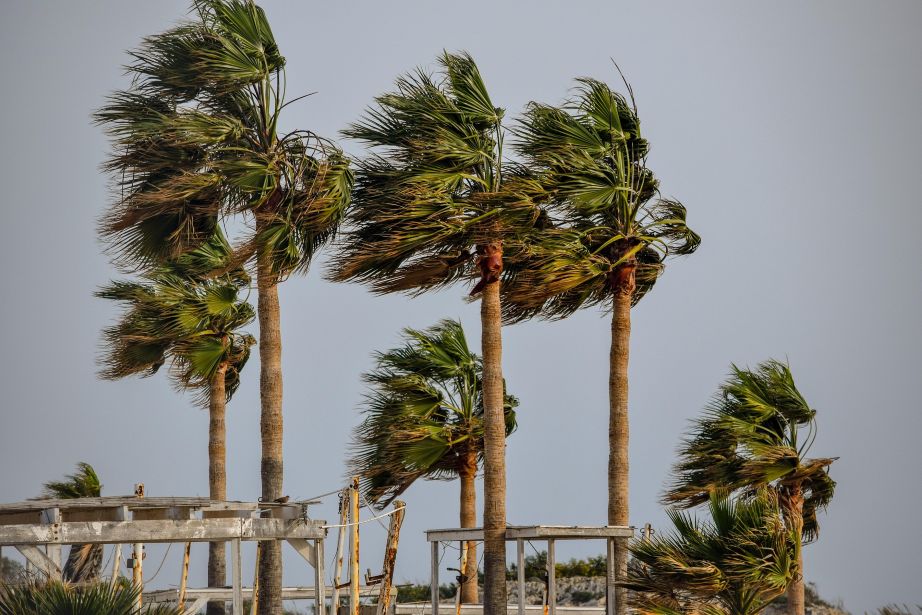
Another advantage of living in Alicante Spain is the city’s coastal microclimate.
Because Alicante sits right beside the Mediterranean, the weather in the city is often milder than in areas further inland. Temperatures tend to be slightly softer, sea breezes help in summer, and extreme conditions are less common than you might expect.
It’s one of the reasons the city feels comfortable throughout much of the year.
A Climate That Shapes Daily Life
In the end, the climate here is not just about sunshine or temperature.
It shapes how people live.
It encourages outdoor cafés, evening walks, busy markets and long conversations on terraces. It invites people to spend time outside rather than rushing home.
And over time it gently slows the rhythm of everyday life in the best possible way.
For many people who move here, the weather becomes one of the quiet reasons they fall in love with living in Alicante Spain.
Not because every day is perfect.
But because so many days are simply pleasant.
And that, in the end, makes a remarkable difference to how life feels.
If you’re curious about what everyday life here is really like, you can explore our full guide to living in Alicante Spain.


